Retrieval Quality at Context Limit
§1 TL;DR #
Gemini 2.5 Flash retrieves 26/26 single-needle factoids at 100% accuracy across all context-fill ratios (13%–92% of 1M-token limit), empirically demonstrating the "Lost in the Middle" U-curve has vanished for simple factoid Q&A at frontier model scale.
§2 Q1 / Q2 / Q3 #
Q1 痛点 #
Liu et al. (2023) showed that LLMs (GPT-3.5, Llama-2) exhibit a U-shaped retrieval accuracy curve — high recall at the start and end of the context, but severe degradation (~55%) in the middle. This "Lost in the Middle" (LITM) effect shaped the entire RAG ecosystem: practitioners chunked documents and retrieved small relevant subsets rather than trusting the model to find facts anywhere in a long context. With 2025-era models claiming 1M+ token windows, the question is whether LITM persists at this scale.
Q2 方法 #
The paper proposes a controlled evaluation protocol:
| Before (Liu et al. 2023) | After (this paper) |
|---|---|
| Models with 4K–32K context (GPT-3.5, Llama-2) | Model with 1M context (Gemini 2.5 Flash) |
| Multi-document NQ-based dataset | Single corpus (Friends transcript, 924K words) with 20 injected non-canon factoid snippets |
| Vary question position relative to evidence | Fix questions at end, vary evidence position across full context via equidistant injection |
| Per-question independent calls | Single batched call with all 26 questions + full context |
| No ablation for training-data leakage | Ablation: same questions without injection confirm model cannot answer from memory |
核心技术壁垒: Not in the paper itself (which is a measurement study), but in the model under test — Google's NIAH-curated training curriculum that explicitly trains on long-context retrieval tasks during pre-training/annealing, making the model robust to all positions. The paper's own barrier is the clean measurement protocol (API-cap verification via HTTP 400 + per-needle ablation + LLM-judge + manual review).
Q3 结果 #
- 26/26 correct (100%) at every tested context-fill ratio from 0.13× to 0.92× of the 1,048,576-token limit
- No U-shape, no degradation — flat accuracy curve
- API precisely rejects at 80% of corpus (1,105,498 tokens > 1,048,576 cap)
- Ablation confirms answers derive exclusively from injected needles, not training data
§3 架构 / 方法图 #
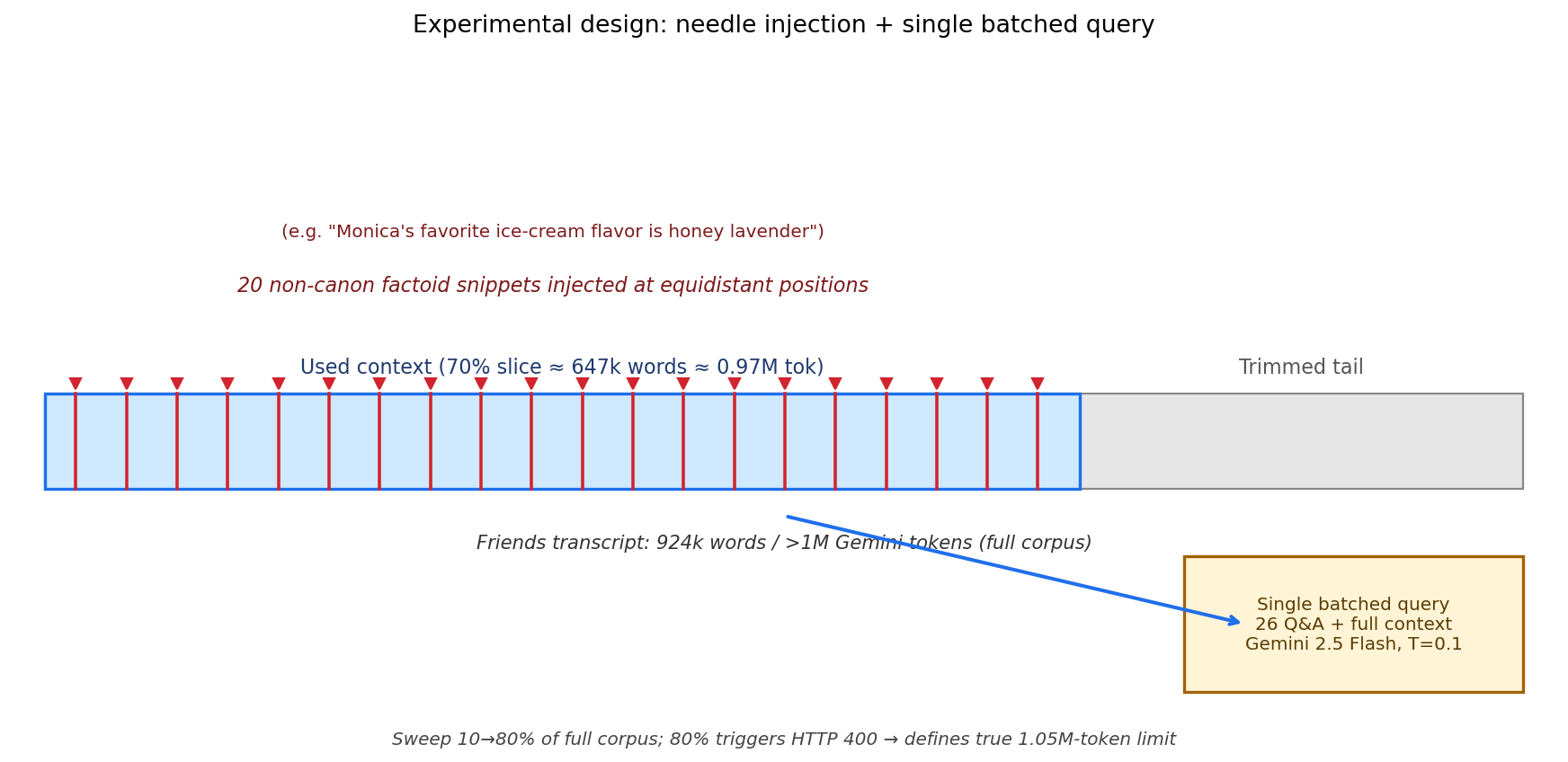
Figure 2: Experimental design schematic.
The experiment pipeline consists of: (1) the Friends TV transcript (924K words, >1M Gemini tokens) trimmed to ratio $r \in \{0.1, 0.2, \ldots, 0.8\}$; (2) 20 non-canon dialogue snippets injected equidistantly across the trimmed slice; (3) a single batched prompt containing the full context followed by all 26 questions; (4) submission to Gemini 2.5 Flash (T=0.1, thinking disabled, no system instructions); (5) answers judged by a fresh Gemini 2.5 Flash instance + manual review. The 80% ratio triggers HTTP 400, which simultaneously validates the exact context cap at 1,048,576 tokens.
§4 作者证明 #
无形式化作者证明 — 仅实证
This paper contains no theorems, lemmas, proofs, convergence bounds, or formal loss functions. It is a purely empirical measurement study. The "proof" is the experimental result itself (Table I: perfect accuracy at all ratios).
What kind of guarantee would have been desirable:
- A statistical confidence bound on per-position accuracy (e.g., $P(\text{acc}(p) \geq 1 - \epsilon) \geq 1 - \delta$ for position $p$) — the current N=26 yields only a 95% CI of [87%, 100%]
- An information-theoretic lower bound relating context length, needle density, and achievable accuracy
- A mechanistic explanation linking positional encoding choice to position-invariant retrieval
6 minimum checks (all trivially satisfied or N/A for this paper type):
| # | Check | Status |
|---|---|---|
| 1 | Theorem statement reproduced? | N/A — no theorem |
| 2 | Assumptions listed? | N/A — no formal assumptions |
| 3 | Proof sketch? | N/A — no proof |
| 4 | Bound tightness discussed? | N/A — no bound |
| 5 | When do assumptions break? | N/A |
| 6 | Loss decomposition? | N/A — no loss function |
§5 实验与数据 #
5.1 Main Result: Accuracy vs Context Ratio #
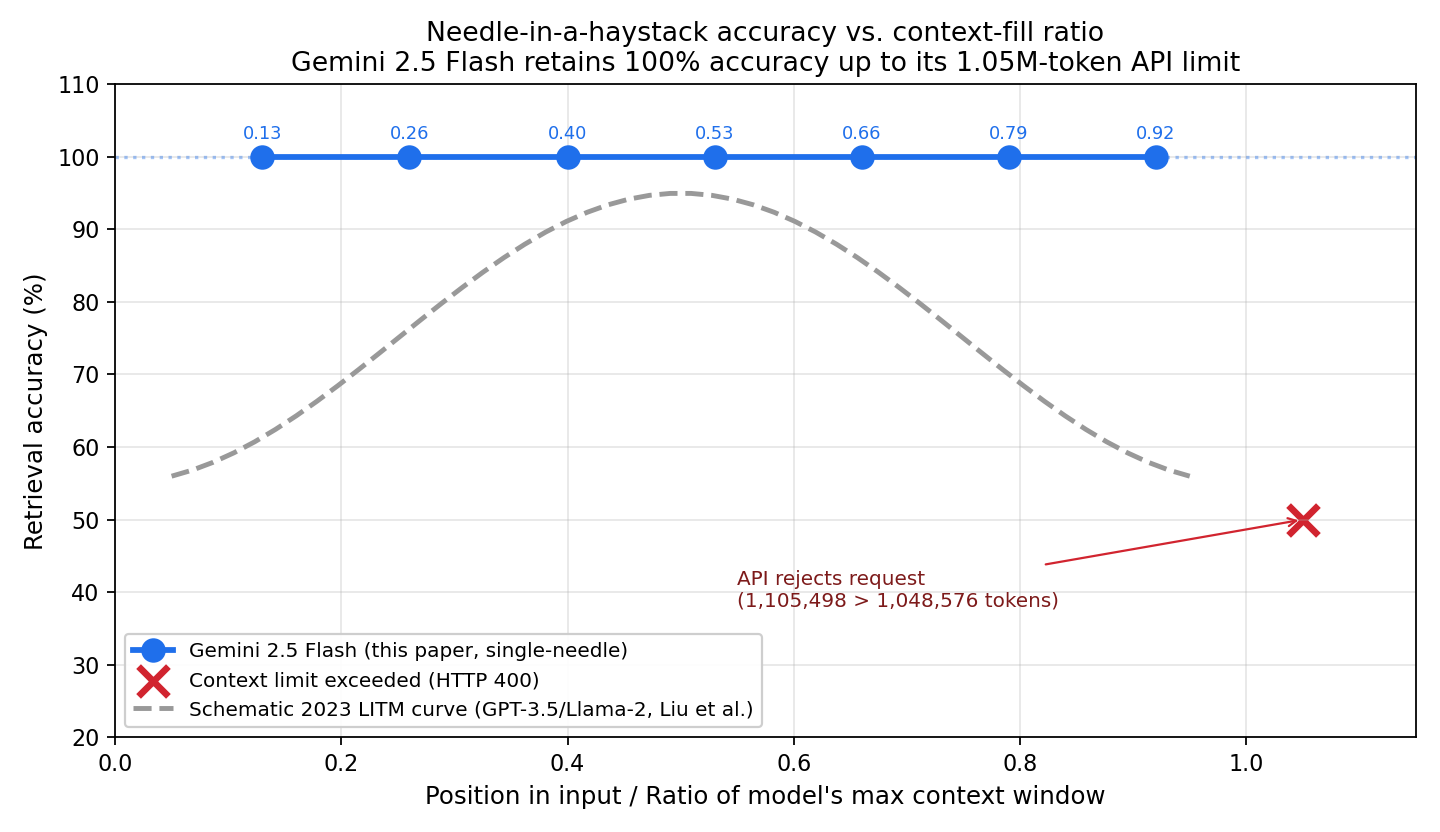
Figure 1: Accuracy vs. context-fill ratio (derived from Table I data).
The blue line shows Gemini 2.5 Flash achieving 26/26 at every ratio from 0.13× to 0.92× of the context limit — a perfectly flat line at 100%. The gray dashed curve represents the schematic 2023 LITM U-shape from Liu et al. (GPT-3.5/Llama-2, ~55% at center). The contrast is stark: a ~45-percentage-point gap in the middle has been entirely closed. The red marker at ratio 0.8 denotes the HTTP 400 rejection point.
5.2 Context Budget Breakdown #
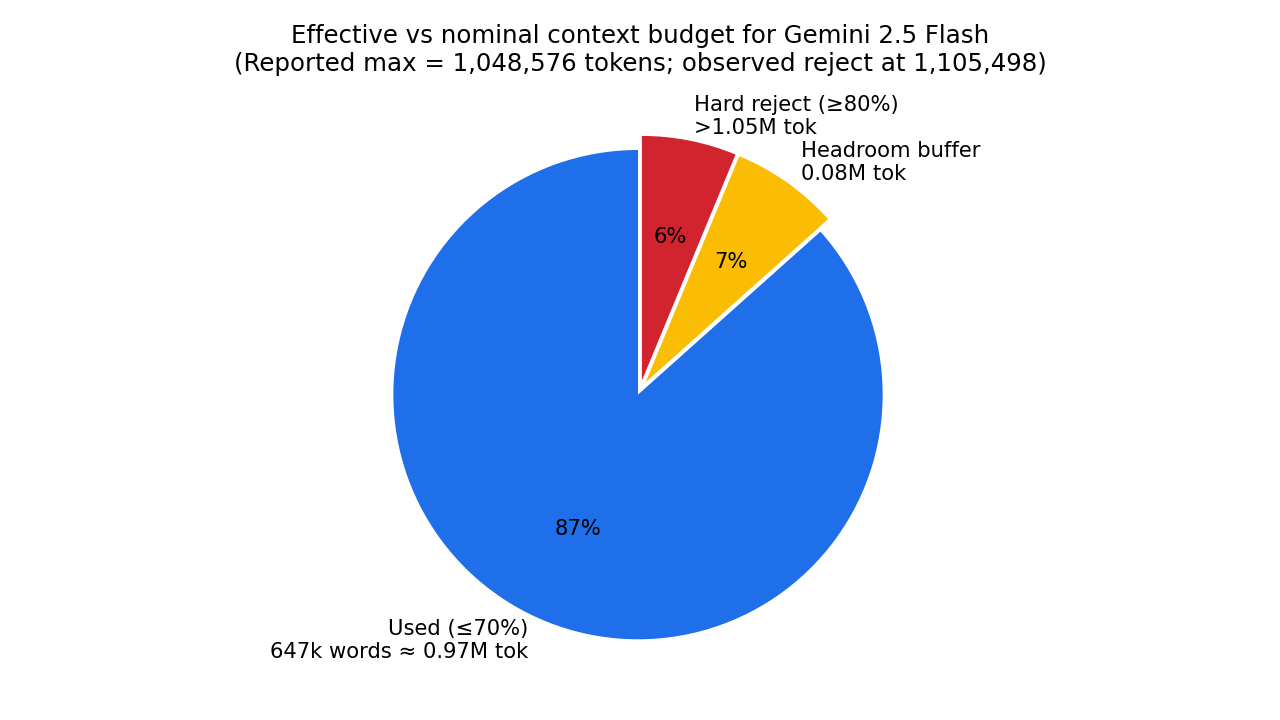
Figure 3: Effective context budget breakdown.
This figure decomposes the context budget into three regimes: (1) the successfully used portion (≤70% of corpus, ~0.97M tokens, representing 0.92× of the 1,048,576 cap); (2) a narrow headroom buffer (~75K tokens between the largest successful run and the hard cap); (3) the rejection regime (≥80% of corpus, 1.05M tokens). The largest successful test leaves only ~7% headroom before the API rejects — demonstrating that the 100% accuracy persists even at near-saturation of the context window.
5.3 Table I (reproduced verbatim) #
| Ratio of full transcript | Ratio of context limit | Questions correct | Accuracy |
|---|---|---|---|
| 0.1 | 0.13 | 26 | 1.0 |
| 0.2 | 0.26 | 26 | 1.0 |
| 0.3 | 0.40 | 26 | 1.0 |
| 0.4 | 0.53 | 26 | 1.0 |
| 0.5 | 0.66 | 26 | 1.0 |
| 0.6 | 0.79 | 26 | 1.0 |
| 0.7 | 0.92 | 26 | 1.0 |
| 0.8 | 1.05 | N/A | N/A |
The accuracy column is degenerate — all 1.0 until rejection. The paper's result is precisely this degeneracy: there is no interpolatable degradation curve. Either the model handles the context perfectly or the request is rejected outright.
5.4 Dataset & Evaluation Design #
| Property | Value |
|---|---|
| Corpus | Friends TV transcript (Kaggle) |
| Corpus size | 924K words (>1M Gemini tokens) |
| Needles injected | 20 non-canon dialogue snippets |
| Questions | 26 (1–2 per needle) |
| Needle placement | Equidistant (one at start, one at end) |
| Context sizes tested | 7 ratios (0.1–0.7 of full corpus) |
| Model | Gemini 2.5 Flash |
| Temperature | 0.1 |
| Thinking | Disabled |
| System prompt | None |
| Judge | Fresh Gemini 2.5 Flash + manual review |
| Ablation | Per-needle verification (query without injection → "unknown") |
5.5 Dataset Analysis #
- Composition: 100% conversational English dialogue (TV show transcript) — no code, math, multilingual, or structured data
- Quality filters: None applied to the corpus itself; the injected snippets are author-crafted non-canon dialogue designed to be stylistically consistent with Friends
- Contamination: Ablation control addresses this — queries without injection produce "not specified" answers, confirming the model cannot answer from pre-training knowledge of Friends
- Annotation: 20 factoid snippets + 26 Q&A pairs authored by the paper's author; no inter-annotator agreement (single author)
- Synthetic data: The needles are synthetic (non-canon dialogues); no automated generation pipeline — hand-crafted
§6 论证链 #
| Step | Premise | Conclusion | Load-bearing? |
|---|---|---|---|
| 1 | Liu et al. 2023 showed LITM (U-shaped accuracy curve at ~55% in the middle) on GPT-3.5/Llama-2 with ≤32K context; this became the foundational justification for chunked RAG | LITM was the accepted model of long-context retrieval failure (2023–2024 consensus) | Yes — establishes the phenomenon being revisited |
| 2 | 2025 frontier LLMs (Gemini 2.5 Flash, Claude 4, GPT-4.1) claim 1M+ token windows; Gemini 1.5 report explicitly mentions NIAH-style training data | LITM may no longer hold at frontier scale — needs empirical re-evaluation | Yes — motivates the experiment |
| 3 | Controlled experiment: Friends corpus (924K words), 20 equidistant non-canon needles (26 Q&A), single batched call, T=0.1, ablation verifies no training-data leakage | The measurement isolates context-length effect on single-needle retrieval with controlled confounders | Yes — experimental validity |
| 4 | 7 ratios tested (0.13×–0.92× of context limit), all return 26/26 correct; 0.8 ratio (1.05× limit) triggers HTTP 400 confirming true cap = 1,048,576 tokens | LITM is absent for single-needle factoid Q&A in Gemini 2.5 Flash up to its full context window | Yes — main empirical finding |
| 5 | Paper cites multi-needle (LangChain 2024), multi-hop (HELMET 2025), multimodal (Vaidya 2025) benchmarks that still report degradation | The LITM disappearance does NOT generalize beyond single-needle; harder tasks remain open problems | Yes — scope limitation (prevents over-claiming) |
§7 实现 cross-reference #
[实现未公开]
No source code, scripts, prompts, or evaluation harness is released. The methodology is described textually in §II with sufficient detail for replication (corpus source: Kaggle Friends transcript; YAML Q&A format shown in Appendix B Listing 1; API parameters: T=0.1, thinking off, no system prompt). The paper does not cite or link any GitHub repository.
关键实现细节 (easy-to-miss from the methodology):
- Single batched call: All 26 questions are submitted in one prompt alongside the full context — this is not 26 separate API calls. Cross-question attention and prefix-caching behavior are part of the measured result (questions always sit in the recency-bias zone at prompt end).
- Context limit discovery via HTTP 400: Rather than estimating the true token limit from documentation, the author uses the API's rejection message (
"input token count (1105498) exceeds maximum (1048576)") as a precise measurement instrument — a cheap trick that pins the cap to the exact token. - Training code open? N/A — this is an evaluation paper, not a training paper. The model (Gemini 2.5 Flash) is closed-weight.
- Evaluation code open? No. Closest open reference for NIAH evaluation: LangChain's multi-needle framework, HELMET benchmark code (ICLR 2025).
- Community replication? Not documented. The experiment is trivially reproducible (~$1–2 in API costs, single afternoon) but no independent replication report is cited.
- Which models/systems use this finding? The result supports the "stuff everything in context" strategy used by Gemini-based applications (NotebookLM, Google AI Studio). RAG designers for frontier-model systems can cite this to justify skipping retrieval for simple single-fact lookup over long documents.